Dividends | Canada

Dividend Reinvestment Plans Canada: How DRIPs Work, Pros, Cons & Taxes

Last updated May 5, 202610 min read
By Gourav KumarReviewed against current Canadian source materialLast verified for 2026Fact-checked against official Canadian sourcesEditorial standardsReport an issue
GK

Gourav Kumar, Founder of Easy Finance Tools

Independent Canadian finance tools creator. Educational content only; not a licensed financial advisor, accountant, mortgage broker, or tax professional.

About the authorLast reviewed: Last updated May 5, 2026
Article visualDividends | Canada
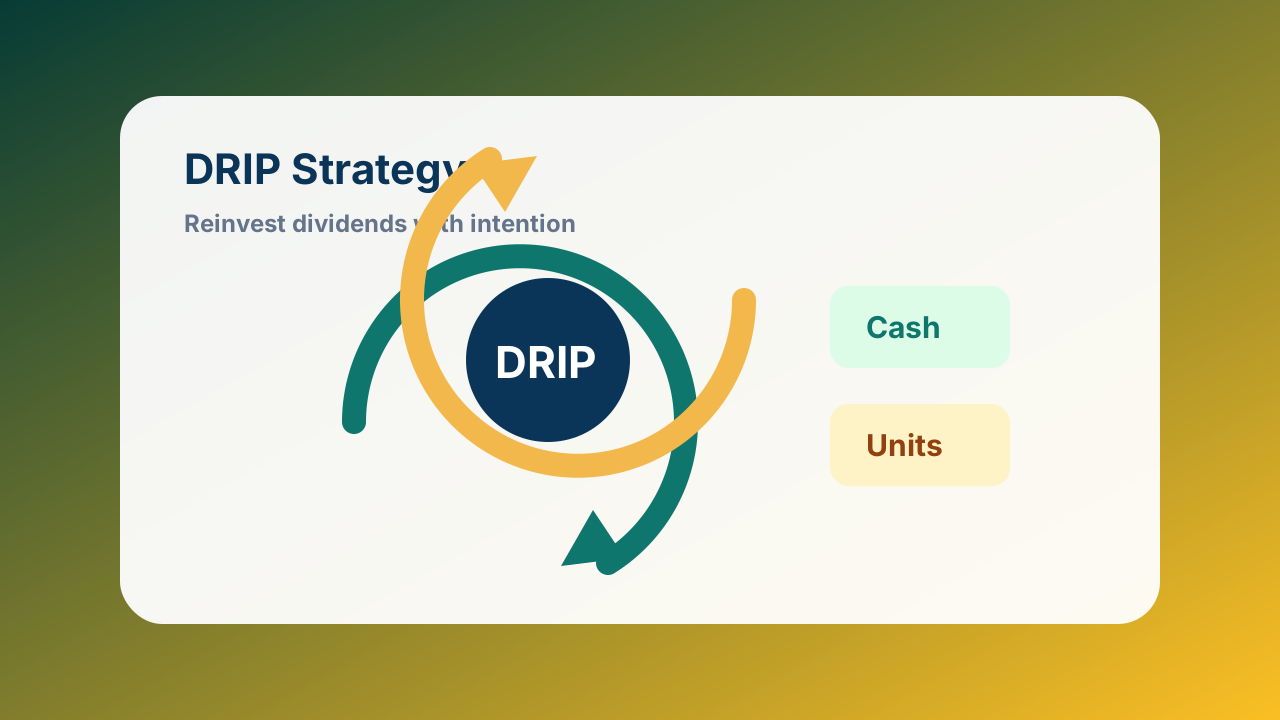
Dividend reinvestment plan illustration showing cash reinvested into portfolio growth

Dividend Reinvestment Plans Canada: How DRIPs Work, Pros, Cons & Taxes

Updated for 2026 Canadian rules
Quick AnswerWhat is a dividend reinvestment plan?

A dividend reinvestment plan, or DRIP, automatically uses cash dividends or fund distributions to buy more shares or units. In Canada, investors may see direct company DRIPs, transfer-agent plans, or synthetic DRIPs offered through a brokerage. DRIPs can help compounding, but they do not remove investment risk or tax reporting in taxable accounts.

  • A DRIP turns cash dividends into additional shares or ETF units instead of leaving the cash idle.
  • Brokerage synthetic DRIPs are usually easier for most Canadian ETF investors than direct company DRIPs.
  • Reinvested dividends can still be taxable in non-registered accounts, even if the cash never reaches your bank account.
  • DRIPs can quietly increase concentration if you only reinvest payouts from a few holdings.

How to use this guide

Read for the decision, then verify the rule

What changes the answer?

Look for the income, timeline, account-room, province, tax, or risk assumption that would make the conclusion weaker.

What source applies?

Use the official links below for rules, limits, tax treatment, benefit dates, or mortgage guidance before acting.

What is not covered?

Personal tax history, contribution-room records, employer plans, debt terms, and household constraints may change the practical decision.

Founder review

Written and maintained by Easy Finance Tools

This page is written and maintained by Easy Finance Tools, checked against official Canadian sources where applicable, and not reviewed by a licensed financial advisor unless a reviewer is explicitly named.

Source verification

Checked against official Canadian sources where applicable

Last updated: May 5, 2026

Last verified for 2026: official rule pages and source links checked where they apply.

What was checked

  • - Primary source links where applicable
  • - Educational disclaimer and decision caveats
  • - Related calculator and guide links
  • - No professional review claim unless explicitly provided

Known limitations

  • - This guide cannot see personal account room, tax filing history, employment benefits, debts, or household constraints.
  • - Official rules and eligibility should be verified before acting.
This page is for education and planning support only. It is not financial, tax, legal, mortgage, or investment advice. Report an error or outdated source.

Dividend reinvestment plans are popular because they make compounding feel automatic. Instead of collecting a dividend as cash, the payment is used to buy more of the same stock or ETF. Over time, those extra shares can produce more dividends of their own.

For Canadian investors, the details matter. A DRIP inside a TFSA or RRSP feels different from a DRIP inside a taxable account. A company-operated DRIP is not the same as a synthetic DRIP at a broker. And reinvesting every payout is not always better than taking cash and rebalancing deliberately.

This guide explains how DRIPs work in Canada, where they can help, where they can backfire, and how to think about taxes, adjusted cost base, broker rules, and portfolio concentration before turning reinvestment on.

What is DRIP investing?

DRIP stands for dividend reinvestment plan. The basic idea is simple: when a stock or ETF pays a dividend or distribution, that cash is used to buy more shares or units instead of sitting as cash in the account.

The appeal is automation. If you were planning to reinvest the dividend anyway, a DRIP can reduce friction and help keep the money working. The tradeoff is that automatic reinvestment can also hide decisions you should still make, such as whether the holding is still the right size in your portfolio.

  • Cash dividend is paid by a company or ETF.
  • The plan uses the cash to buy additional shares or units.
  • Future dividends are calculated on a larger number of shares or units.
  • The compounding effect grows slowly at first and becomes more visible over long periods.

Company DRIP vs synthetic brokerage DRIP

A direct or company DRIP is normally connected to a company's own plan, often administered through a transfer agent. These plans may have their own enrollment rules, paperwork, minimum share requirements, purchase fees, or discounts. They can be useful for investors who want to build a position in a specific company, but they are not the easiest workflow for everyone.

A synthetic DRIP is offered through a brokerage. In that setup, the company or ETF pays cash into your account, and the broker uses that cash to buy more shares or ETF units according to its DRIP rules. For many Canadians using ETFs in a TFSA, RRSP, or non-registered account, this is the version they are most likely to encounter.

The important detail is that broker rules vary. Some brokers reinvest only when there is enough cash to buy a whole share or unit. Others may support fractional reinvestment for certain securities. Always check the current broker policy before assuming every dollar will be reinvested.

TypeHow it usually worksMain thing to check
Company DRIPInvestor enrolls in a plan connected to one companyMinimums, fees, discounts, paperwork, and transfer-agent rules
Synthetic broker DRIPBroker reinvests eligible dividends or ETF distributions inside the accountWhether the broker buys whole or fractional shares and which securities qualify
Manual reinvestmentInvestor lets dividends accumulate as cash, then chooses what to buyTrading costs, discipline, and whether cash sits idle for too long

How a DRIP compounds over time

A DRIP does not create a special return by itself. It simply reinvests cash distributions automatically. The compounding comes from owning more shares or units after each reinvestment, which can produce more future distributions if the investment keeps paying.

The effect depends on yield, price movement, distribution growth, fees, taxes, and time. If the investment performs poorly, a DRIP can also keep adding to a losing or overly concentrated position. That is why reinvestment should be paired with periodic portfolio review.

  • Higher yield can increase reinvestment speed, but high yield can also come with higher risk.
  • Dividend growth can improve long-term cash flow, but payouts are not guaranteed.
  • Price changes affect how many shares each dividend can buy.
  • Taxes in a non-registered account can reduce the amount you can truly reinvest after filing.

DRIP taxes in Canada

A common Canadian tax mistake is assuming reinvested dividends are not taxable because the investor did not receive cash in a bank account. In a non-registered account, dividends and fund distributions can still be taxable even if they are immediately reinvested.

Canadian-source dividends are usually reported on tax slips and may be eligible or other-than-eligible dividends. Eligible Canadian dividends can qualify for the dividend tax credit, but the exact tax outcome depends on the account, province, income level, and the type of dividend or distribution reported.

For mutual funds and ETFs held in a taxable account, reinvested distributions can also affect adjusted cost base. The CRA notes that reinvested distributions can change the average cost per unit or share. If you sell later, poor ACB tracking can lead to incorrect capital-gains reporting.

  • Inside a TFSA, Canadian tax on qualified investment income is generally sheltered while funds remain in the account and qualified withdrawals are tax-free.
  • Inside an RRSP, investment income is generally tax-deferred, but withdrawals are taxable as income later.
  • Inside a taxable account, dividends and distributions can create annual tax reporting even when reinvested.
  • Foreign dividends do not qualify for the Canadian dividend tax credit.

When reinvesting dividends can make sense

A DRIP often makes the most sense when the investor is still in the accumulation phase, still wants more exposure to the same holding, and does not need the dividend cash for spending. This is common for younger investors using a TFSA or RRSP to buy broad ETFs for long-term growth.

It can also help investors who struggle to reinvest manually. If cash tends to sit unused for months, automation can improve consistency. The best DRIP setup is usually the one that supports a plan you already believe in, not one that encourages you to keep buying a holding without review.

  • You want long-term compounding and do not need the dividend cash today.
  • The holding still fits your target allocation.
  • The account type makes reinvestment simple from a tax and tracking perspective.
  • The broker's DRIP rules are clear and do not create surprise cash leftovers.

When taking dividends as cash may be better

Taking dividends as cash is not a failure. Cash distributions can be useful when you are drawing income, rebalancing, paying taxes, or intentionally redirecting cash toward underweight parts of the portfolio.

Manual reinvestment gives more control. Instead of automatically buying the same holding, you can decide whether to add to a different ETF, build cash for a near-term goal, pay down debt, or rebalance away from a position that has grown too large.

  • You are retired or using portfolio cash flow for spending.
  • You want to rebalance across several holdings instead of buying the same one.
  • A taxable account requires cash to pay tax on dividends or distributions.
  • A holding has become too large or no longer fits your plan.

DRIP checklist for Canadian investors

Before enabling a DRIP, slow down and check the account, security, tax, and allocation details. A five-minute review can prevent years of quiet drift.

The right question is not simply whether DRIPs are good. The better question is whether automatic reinvestment is good for this holding, in this account, for this stage of your plan.

  • Confirm the investment still fits your long-term plan.
  • Check whether the DRIP buys whole shares only or supports fractional reinvestment.
  • Know whether the account is TFSA, RRSP, FHSA, or taxable.
  • Track adjusted cost base carefully in taxable accounts.
  • Review concentration at least once or twice per year.
  • Compare DRIP growth against your broader compound-interest plan.

Example scenario

Example: how a simple DRIP can change the share count

Assume Priya owns $20,000 of a Canadian dividend ETF with a simplified 4% annual distribution. That suggests about $800 per year in distributions before taxes, fees, and payout changes. If the ETF price were $40 per unit and the broker allowed full reinvestment, that $800 could buy about 20 more units over the year.

Those extra units can generate future distributions too. If Priya leaves DRIP on for many years, the effect can become meaningful. But the example only works as planning math. The real outcome depends on unit price, distribution changes, tax treatment, trading rules, and whether the ETF still fits Priya's portfolio.

Common mistakes

Mistakes to avoid

Thinking reinvested dividends are tax-free

In a taxable account, reinvested dividends and distributions can still be taxable. The tax slip matters even if no cash reaches your bank account.

Ignoring adjusted cost base

Reinvested fund distributions can affect ACB. If you do not track cost base in a taxable account, your capital-gains reporting may be wrong later.

Letting one holding get too large

Automatic reinvestment can increase concentration. Review whether the holding still matches your target allocation.

Assuming every broker DRIP is the same

Brokerage DRIP rules vary. Some securities may not qualify, and some brokers may only reinvest enough cash to buy whole shares.

Using DRIP when cash is needed soon

If you need portfolio cash flow for spending, taxes, or a short-term goal, automatic reinvestment may work against the plan.

Related content

Use these next

Each guide points to one practical calculator and two related guides so the next step stays educational instead of promotional.

How this article was prepared

Last updated: May 5, 2026

This article explains DRIPs from a Canadian investor perspective, focusing on account type, brokerage workflow, compounding math, taxation, adjusted cost base, and portfolio concentration. It avoids recommending specific stocks or ETFs.

Assumptions

  • Dollar examples are simplified CAD planning examples and do not forecast actual returns or distributions.
  • Tax discussion is general and does not model provincial tax, foreign withholding, every T3 or T5 box, or investor-specific circumstances.
  • Brokerage DRIP rules can change and should be verified directly with the broker before enrollment.

Sources and review

Self-reviewed by: Gourav Kumar

Checked against official Canadian source material where applicable; not reviewed by a licensed financial advisor, accountant, mortgage broker, or tax professional unless explicitly stated.

Educational information only. Confirm broker DRIP rules, tax slips, ACB records, and account treatment with official sources or a qualified professional.

Official sources

Official Canadian sources to verify

These primary references help readers verify the Canadian rules, limits, and tax treatment discussed in this guide.

Review note

Educational content, source-led review

This page is written for Canadian readers and reviewed against official or primary sources where the topic depends on rules, tax treatment, or account mechanics. The goal is to explain the decision, not to recommend a product or predict returns.

Last reviewed: May 5, 2026How we review content

Author and review

GK

Gourav Kumar

Founder of Easy Finance Tools

Independent Canadian personal finance tools creator focused on calculators, investing education, and beginner-friendly financial planning. Not a licensed financial advisor, accountant, mortgage broker, or tax professional.

How this content is handled

Content is educational, reviewed against official Canadian sources where applicable, and updated when account rules, calculator assumptions, or source material changes. It is not professional financial advice.

Editorial standardsCalculator methodologyUpdated: May 5, 2026Dividends | Canada

Educational disclaimer

This article is educational only and is not investment, tax, legal, or financial advice. DRIPs do not guarantee returns, dividends can change, share prices can fall, and no stock, ETF, broker, or account type is recommended for your personal situation.

Reader feedback

Was this useful?

This saves only in your browser for now; no account or tracking profile is created.

FAQ

Frequently asked questions

Is DRIP investing worth it in Canada?

It can be useful when you want long-term compounding and the holding still fits your plan. It is less useful when you need cash, need to rebalance, or hold the investment in a taxable account where tracking becomes more work.

Are reinvested dividends taxable in Canada?

In a non-registered account, dividends and distributions can still be taxable even when reinvested. In registered accounts such as a TFSA or RRSP, the account rules usually matter more than each reinvested payment.

What is a synthetic DRIP?

A synthetic DRIP is a brokerage feature where the broker uses dividend cash in your account to buy more shares or ETF units according to its own rules.

Do DRIPs buy fractional shares?

Sometimes, but not always. Some direct plans or brokers may support fractional reinvestment, while others may reinvest only enough cash to buy whole shares or units.

Should I DRIP inside a TFSA?

A TFSA can be a clean place to reinvest dividends if the investment fits your plan and you do not need the cash. The bigger question is whether dividend investing is the right use of your TFSA room.

Can DRIP create too much concentration?

Yes. If you automatically reinvest dividends from one stock or one sector-heavy ETF, that position can slowly become larger than intended.

Back to Blog